


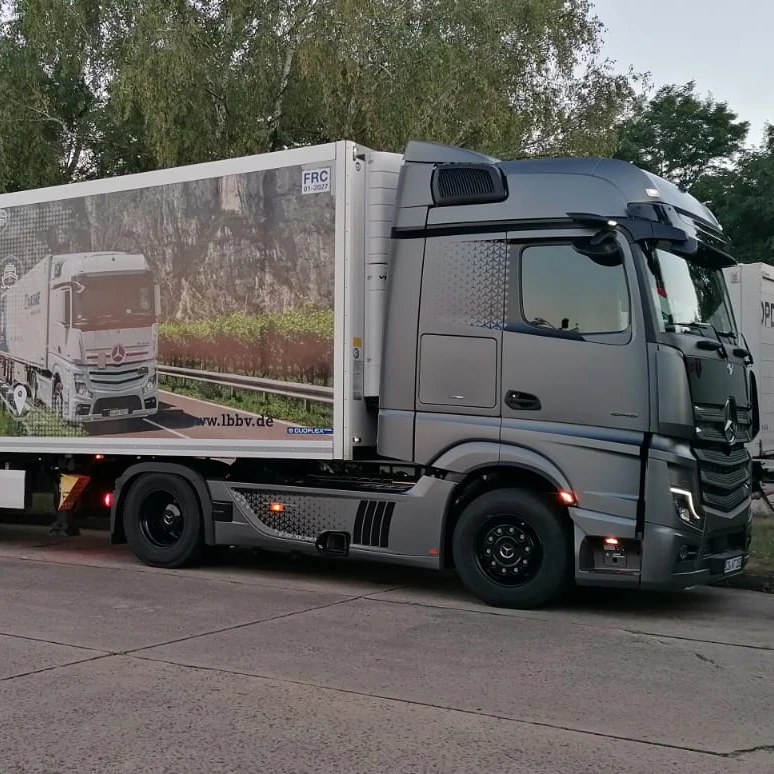
Reduce your truck's diesel consumption and CO₂ emissions - with the Negus Comfort Booster!
In 2023, around 34.2 million trucks were counted on the roads in Europe, and the industry has caused enormous diesel consumption through these vehicles. According to the European Commission, it has been estimated that diesel consumption by trucks in Europe accounts for around 60 million tons of CO₂ annually, which is one of the main causes of CO₂ emissions in the transport sector. In fact, trucks are responsible for around 25% of total CO₂ emissions in road transport.
But what if there was a solution that not only lowered diesel consumption, but also reduced CO₂ emissions and helped you meet legal requirements? The Negus Comfort Booster offers exactly this solution – and much more.
How the Negus Comfort Booster reduces diesel consumption
More efficiency at lower costs
In European truck traffic, it is mainly the idle times of the vehicles during which diesel is consumed unnecessarily. An engine running for hours on end not only wastes energy, but also causes high operating costs. With the Negus Comfort Booster, companies can significantly reduce their operating costs. This is because the diesel consumption of trucks is significantly reduced thanks to the constant power supply from the battery and the engine of the cooling unit. This not only ensures lower fuel costs, but also lower maintenance costs, as the engine is subjected to less stress. At the same time, Nox sensors before and after the catalytic converter are protected and optimum care of the on-board batteries is ensured.
Advantages for freight forwarders and companies
For companies looking for innovative solutions to reduce their emissions and operating costs, the Negus Comfort Booster is a real winner. Thanks to the technology to maintain the battery at an optimal state of charge during rest periods, you don’t have to keep the engine running unnecessarily, which significantly reduces CO₂ emissions from trucks. This has a positive impact on your carbon footprint and could even lead to subsidies and tax benefits as more and more countries support sustainable innovations in transportation.
Measure to comply with the Energy Efficiency Act (EnEfG)
According to the provisions of the Energy Efficiency Act of 18.11.2023, companies with an annual average total energy consumption of more than 2.5 gigawatt hours in the last three completed calendar years are obliged to draw up and publish concrete, feasible implementation plans for all identified and economically assessed end energy saving measures within three years at the latest.
In addition, companies with an annual average total final energy consumption of more than 7.5 gigawatt hours within the last 3 completed calendar years are obliged to set up an energy or environmental management system. The review of total energy consumption must be carried out by each company at the beginning of the year retrospectively for the last three calendar years.
Total energy consumption also includes the fuel consumption of the truck fleet.
There are no exemptions for SMEs.
For estimating fuel energy consumption:
- 1 liter of diesel (EN 590) corresponds to just under 10 kWh of energy content.
(1 GWh=1 million kWh; 1 million kWh=100,000 liters of diesel (EN 590); 2.5 GWh=250,000 liters of diesel (EN 590).

Influence of downtimes on fuel consumption
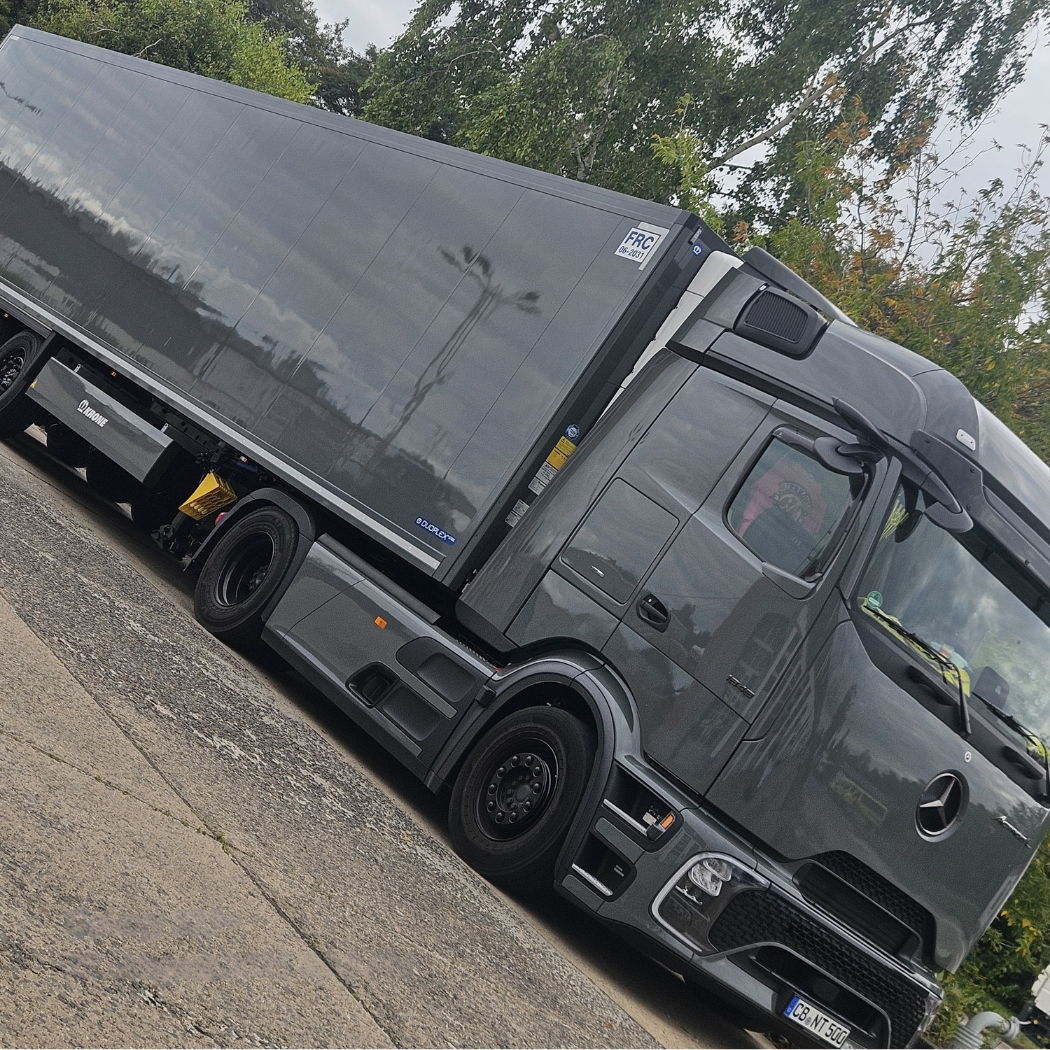
Truck engines also consume fuel and emit CO₂ when idling. A study by the Federal Environment Agency shows that the fuel consumption of a truck when idling is around 1.5-1.9 liters per hour. During the legally prescribed rest period for drivers, there is an average of up to 5 hours of unnecessary engine running per day. Assuming only 267 operating days per year (on which the event occurs), this results in an annual fuel consumption of around 2,000 liters per vehicle. This corresponds to around 5.3 tons of CO₂ per year (assuming that 1 liter of diesel emits around 2.68 kg of CO₂). With only one truck! How many are in your fleet?
Although specific data on the share of truck idle times in total CO₂ emissions is lacking, it is clear that emissions during idle times make a significant contribution. Measures such as the use of the Negus Comfort Booster, which reduces fuel consumption during idle times, can therefore make an important contribution to reducing emissions in road freight transport.
The sustainability factor: reduced CO₂ emissions for the environment

CO₂ emissions from trucks and the impact on the environment
Truck traffic is one of the largest sources of CO₂ emissions in Europe. By using the Negus Comfort Booster, companies can significantly reduce their CO₂ emissions from trucks. Our solution ensures that less diesel is consumed, which leads to a direct reduction in CO₂ emissions. This not only helps the environment, but also helps companies achieve their sustainability goals and invest in a greener future.

Promotion and future prospects for freight forwarders
The Negus Comfort Booster is the perfect solution for reducing the diesel consumption of trucks and simultaneously lowering CO₂ emissions in the logistics sector. For companies, this means lower operating costs, a better carbon footprint and the opportunity to benefit from subsidies. Truck drivers benefit from a more comfortable and quieter working environment during their rest periods.
But the biggest winners are the drivers.
The Negus Comfort Booster as the solution for haulage companies and drivers
The Negus Comfort Booster is the perfect solution for reducing the diesel consumption of trucks and simultaneously lowering CO₂ emissions in the logistics sector. For companies, this means lower operating costs, a better carbon footprint and the opportunity to benefit from subsidies. Truck drivers benefit from a more comfortable and quieter working environment during their rest periods.
But the biggest winners are the drivers.
Frequently asked questions
How can the diesel consumption of trucks be reduced when stationary?
The diesel consumption of trucks during downtimes can be reduced by using efficient technologies that allow the vehicle’s battery to be charged without the engine running. These technologies help to significantly reduce diesel consumption without the truck engine having to run.
How do CO₂ emissions from trucks affect the environment?
HGVs are responsible for a significant proportion of CO₂ emissions in road traffic. Heavy commercial vehicles account for around 25% of total CO₂ emissions from road traffic. Diesel consumption while driving and especially during idle times leads to a continuous increase in emissions that pollute the environment.
What can companies do to reduce the diesel consumption and CO₂ emissions of their trucks?
Companies can use innovative technologies to lower the diesel consumption of their trucks and reduce CO₂ emissions at the same time. This not only helps the environment, but also helps to achieve statutory emission targets and reduce operating costs.
How can truck drivers organize their rest periods efficiently?
Truck drivers can meet their legally required rest periods without having to keep the truck engine running by using technologies that cover the vehicle’s energy needs during idle times. This helps to reduce diesel consumption while ensuring the driver’s comfort and rest.
Why should companies invest in solutions that reduce diesel consumption and CO₂ emissions from trucks?
Investing in technologies that reduce diesel consumption and CO₂ emissions from trucks brings long-term cost reductions and an improved carbon footprint. Companies also benefit from possible subsidies and tax advantages that are promoted by sustainable measures in the transportation sector.
And there is another very important advantage that you cannot calculate in monetary terms:
VALUATION of the driving personnel.